

What Does B2B Sales Mean? A Working Definition
What does B2B sales mean once you strip away the jargon? It means one company selling products or services to another company instead of to individual consumers. The buyer is a business, so the purchase has to support that business's operations, costs or growth.
For example, each of the following is a B2B deal. A business sits on both sides of the table in every case.
- A SaaS vendor sells payroll software to a logistics firm with 400 drivers.
- A manufacturer supplies brake components to a carmaker under a three year contract.
- An agency sells outbound lead generation to a software startup that needs pipeline before its next funding round.
The first example follows a typical SaaS sales model with recurring fees. The other two run on supply contracts and monthly retainers. However, while the deal structures differ, the buyer's position stays the same.
The person who signs is spending company money. So they answer to colleagues in finance, operations and leadership, and they expect a measurable return. As a result, decisions take longer and involve more people. Buyers also want proof before they commit.
Because of this, the B2B buyer journey looks very different from a consumer checkout. Harvard Business Review research on B2B buying found that the average purchase involves more than five decision makers, and a sale to a business means convincing that whole group.
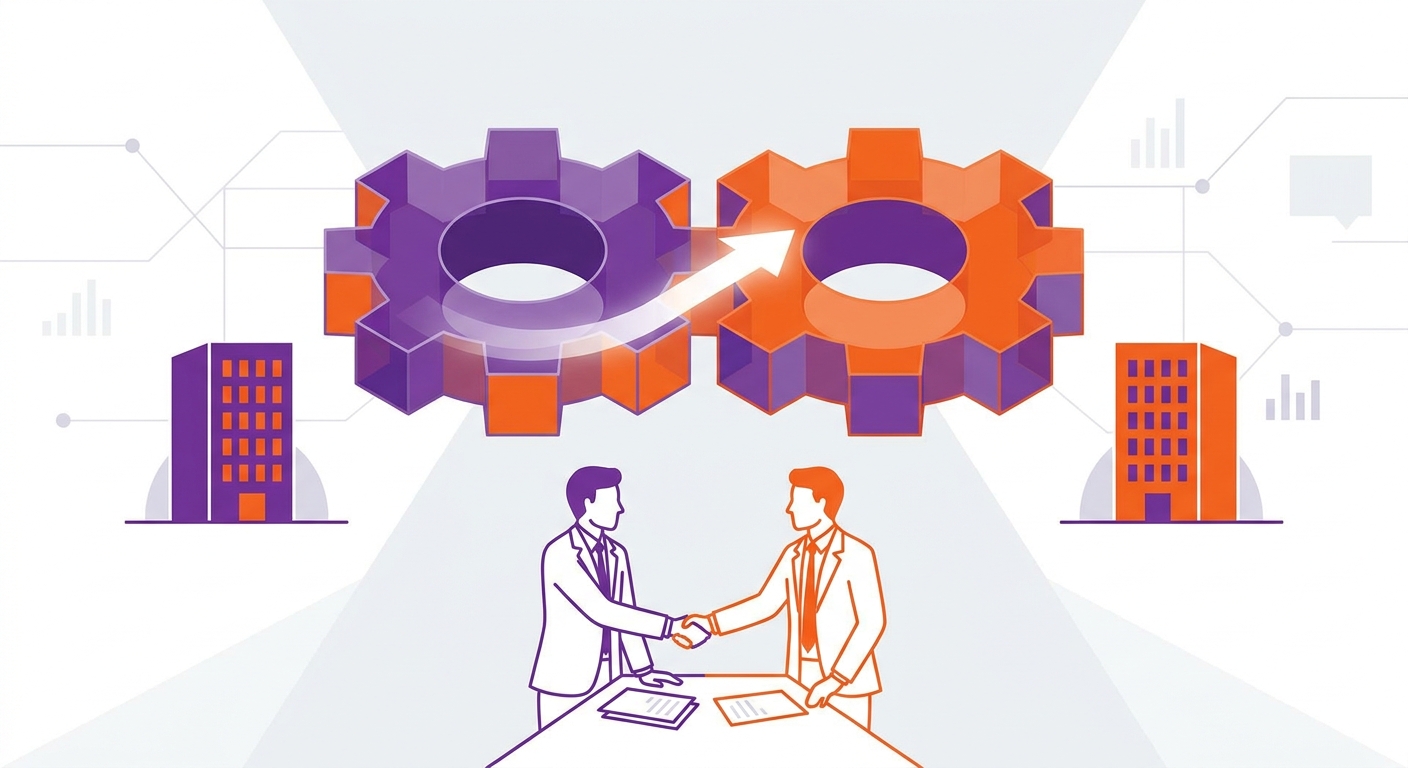
What is B to B sales in practice?
Ask what is B to B sales, and the answer is one company selling products or services to another. "B to B" and "B2B" mean the same thing, and B2B is simply the shorter spelling. So anyone asking what does B2B sales mean is asking about the same discipline.
The definition fits in one line. However, the daily work takes more effort, because each deal involves several buyers, longer timelines and formal approval steps.
A typical week for a B2B seller looks like this:
- Monday goes to research: target accounts, funding news, hiring signals and the names of decision makers.
- Tuesday and Wednesday cover outreach by email, phone and LinkedIn, often 40 to 60 personalised contacts.
- Thursday holds discovery calls and demos with prospects who replied.
- Friday is for proposals, pricing questions and contract review with legal or procurement teams.
The job also takes patience. Many B2B buyers want four to six touchpoints before they take a call seriously. For that reason, sellers plan sequences of messages in advance. Our guides on sales prospecting techniques and cold email templates for B2B show how to build them.
Buyers also do much of their research without you. The Gartner B2B buying report found that buyers spend about 17% of their buying time meeting potential suppliers. As a result, your website, case studies and proposals often make the case before you speak to anyone.
Who buys and who sells
A B2B purchase rarely rests with one person. Most deals pass through a buying committee of four roles, and each role judges your offer by a different standard.
- The economic buyer controls the budget and approves the spend. This person asks about return on investment and payback period.
- The technical evaluator checks integrations, data security and fit with existing systems.
- The end user works with the product daily and cares about ease of use and training time.
- Procurement handles contracts, pricing terms and vendor compliance checks.
On the selling side, the work is split by stage. Sales development representatives (SDRs) research accounts, qualify leads against the ideal customer profile and book first meetings. Then account executives run discovery, demos and negotiation until the contract is signed. After that, account managers own the relationship, handle renewals and look for expansion.
Any buyer role can stall a deal for its own reasons, so one generic pitch deck will fall short. For example, a CFO wants a cost model, while an IT lead wants an architecture diagram and API documentation. Sellers who map these roles early and give each one the material it needs shorten the sales cycle. They also lose fewer deals in late stage review.
How B2B sales differs from B2C sales
A consumer can buy wireless headphones on a phone in ten minutes. A company rolling out a new CRM may need four months and a signed procurement form before anyone logs in. These two purchases differ on almost every factor that affects how you sell.
First, the buyer is different. In B2C, one person decides and pays with their own money. In B2B, a buying group of five to ten people shares the decision, and each member answers to someone else.
Decision speed follows from that structure. Because every stakeholder needs a reason to approve, deals move slowly. Check sales cycle length benchmarks for your sector before you set quarterly targets. In enterprise software, cycles of six to nine months are common.
Deal value raises the stakes as well. A €200 pair of headphones is easy to return if it disappoints. A €120,000 annual licence commits a budget for years, so finance teams model the cost line by line.
Relationships also last longer. Consumer brands win repeat purchases through campaigns, which is why a B2C marketing strategy relies on reach and promotions. A B2B vendor often keeps the same account manager on a client for five years or more.
Trust matters most of all in B2B. A shopper reads two reviews and checks out. However, a procurement lead asks for client references, security documentation and proof of local support before agreeing to a second call.
Buying committees and longer cycles
A B2B purchase rarely rests with one person. The product affects budgets, workflows and company data, so several people have to approve it. A typical committee includes the daily user and a manager who owns the budget. Someone from IT or security joins, and procurement or legal often does too.
Each of these people has their own questions and their own calendar. So a deal that looks close after the first demo can still take six weeks or six months to sign. Security reviews alone often add two to four weeks. Procurement may also hold the contract until the next budget cycle.
Sellers keep deals moving by making the process visible to everyone involved. First, they find out who signs off and what each person needs to see. This step is known as stakeholder mapping. Then they agree on concrete dates with the buyer instead of waiting for replies.
- End every call with one agreed next step, a named owner and a date.
- Send a written summary within 24 hours that lists decisions and open questions.
- Share a mutual action plan that shows each step until signature.
Written summaries also travel inside the buyer's company. For example, your champion can forward a recap to the CFO without rewriting it. That keeps your message accurate in meetings you never attend.
Deal size, contracts and pricing
B2B deals are larger than consumer purchases, and the paperwork shows it. Most agreements run on annual contracts, often with multiyear options. Before anyone signs, both sides write down renewal terms, payment schedules and service levels.
Pricing rarely comes from a public price list. Instead, vendors build custom quotes based on seats, usage or service scope. So a team of 50 users pays a different rate than a company rolling out to 2,000 employees. Volume discounts usually start at set thresholds, and buyers expect to ask for them.
Before the deal closes, the buyer usually runs several checks:
- Procurement compares the quote against approved budgets and existing vendors.
- Legal teams review liability, data protection and termination clauses.
- Finance checks payment terms and currency, especially for cross border contracts.
Buyers also compare your price against local competitors before they negotiate. If you charge 40% more than a domestic provider, you need a clear reason for the gap. Solid pricing benchmarks help you set a number you can defend. Also, a review of common SaaS pricing models shows which structure your market already understands.
The main B2B sales models
Inbound sales suits companies with strong content and search visibility. Buyers find you, fill out a form and expect a fast reply. Deals usually range from 2,000 to 50,000 euros a year. However, inbound volume can take 12 months to build, so early cash flow suffers.
Outbound sales fits teams with a clear ICP and a defined market. Reps contact prospects by email, phone or LinkedIn, and deals often land between 10,000 and 100,000 euros. Good outbound lead generation depends on list quality. Volume alone fails, because poor targeting burns your sending domains.
Account based selling works for vendors with a short list of large targets. Sales and marketing work the same accounts, often with support from account based marketing. Contracts typically exceed 100,000 euros. Cycles also run 9 to 18 months, so one lost account can sink a quarter.
Channel or partner sales suits products that resellers or integrators can bundle into their own offers. Deal size follows the partner's customers and ranges from 5,000 euros to enterprise contracts. A written partner channel strategy sets margins and territories. Even so, partners own the customer relationship and may push a competitor instead.
Product led growth suits software that users can try without a salesperson. Entry deals are small, often under 5,000 euros, and sales joins when accounts expand. In short, product led growth lowers acquisition cost. Free users still rarely convert unless the product proves its value in the first week.
How to run a B2B sales process step by step
A B2B sale usually involves several stakeholders, a long cycle and a formal approval at the end. Handling each deal differently therefore costs time and makes results hard to predict. A repeatable process gives every rep the same sequence of actions. Because of that, the team can forecast revenue from real conversion rates.
A fixed structure also shows where deals stall. For example, if 60 percent of prospects drop out after the demo, rework the demo before you hire more prospectors. Map these drop points against your sales pipeline stages and fix one weak stage at a time.
Preparation comes before the first email. Your go to market strategy should already define the target segment, the buyer roles and the price range. Then outreach starts from tested assumptions about who buys and why.
- Define your ideal customer profile by industry, company size and region.
- Build a contact list of decision makers and the people who influence them.
- Qualify each lead against budget, need and timing.
- Run a discovery call and record the buyer's problem in their own words.
- Present a proposal tied to measurable outcomes.
- Handle objections, agree on terms and close with a signed contract.
Step 1: Define your ideal customer profile
Your ideal customer profile (ICP) describes the companies most likely to buy from you and stay. It keeps your sales team away from accounts that will never close. Start with firmographic criteria you can verify from public data.
- Industry, defined narrowly enough that buyers share the same problems, for example midsize logistics software firms
- Company size by headcount or annual revenue
- Region, including the languages and regulations your team can handle
- Tech stack, since tools like Salesforce or HubSpot often point to budget and integration needs
Next, list the trigger events that signal a need. A new funding round, a leadership change or a hiring spike for one role all qualify. Because these events create urgency, accounts that show them tend to convert faster than accounts that only match on paper.
Market sizing tells you whether your ICP holds enough accounts to reach your revenue target. Use a market sizing guide to count the companies that meet every criterion. Then map competitors to see which segments they already serve well and where gaps remain.
Finally, test the profile against your won and lost deals. ICP validation with real pipeline data shows which criteria predict a win and which you can drop.
Suggested internal links: ICP validation and market sizing guide.
Step 2: Build lists and start prospecting
Source contacts that match your ideal customer profile. LinkedIn Sales Navigator, industry directories, trade fair exhibitor lists and your own CRM are all useful starting points. Aim for 200 to 500 accounts you can research properly, with two or three contacts per account.
Then check every record before it enters a sequence. Verify email addresses, confirm job titles against current LinkedIn profiles and remove anyone who has left the company. In European markets you also need a lawful basis for contacting people. Read up on GDPR compliant outreach and document your legitimate interest for each segment.
Skip large unverified lists. A purchased file of 10,000 contacts often brings bounce rates above 10 percent, spam complaints and a damaged sending domain. German and French buyers also spot generic messages quickly and rarely reply to them.
Next, plan a multichannel sales sequence that runs over three to four weeks. A typical structure looks like this:
- Day 1: a short, personalised email tied to a specific trigger, such as a new funding round or a recent hire.
- Day 3: a connection request as part of your LinkedIn prospecting.
- Day 6: a phone call that references your first email.
- Days 10 to 21: two further emails and one more call.
Step 3: Qualify, demo and propose
Qualification decides whether a lead deserves more of your time. BANT checks budget, authority, need and timeline. MEDDIC suits complex deals and covers metrics, economic buyer, decision criteria, decision process, identified pain and champion. For a side by side comparison, see BANT vs MEDDIC.
Then run the discovery call. Ask open questions about current processes, costs and earlier attempts that failed. Our guide to discovery call questions lists the ones that surface real pain. Write down the buyer's exact words, because you will reuse them in the demo and the proposal.
The demo should show only the features that address the stated problem. A logistics manager who raised late deliveries wants to see shipment tracking and delay alerts first. Keep the session under 30 minutes and leave ten for questions.
A clear proposal includes:
- A summary of the problem in the buyer's own language
- The scope of work and specific deliverables
- Pricing, payment terms and contract length
- An implementation timeline with named owners
- Success metrics agreed during discovery
Send the proposal within 48 hours of the demo. Also walk the buyer through it on a short call, so you can answer objections as they come up.
Step 4: Close the deal and hand over
Negotiation in B2B rarely centres on price alone. Buyers push on payment terms, contract length, service levels and liability caps. So set your walkaway points before the call and trade concessions instead of giving them away. For example, offer a lower rate in exchange for a two year term.
Then move to signature quickly. Send the contract with a clear deadline, name the signatory on the buyer side and confirm who reviews it in legal or procurement. Most delays at this stage come from an approver nobody identified earlier.
After signature, hand the account over in a structured way. Your handover document should cover:
- the business problem the buyer wants solved
- agreed success metrics and target dates
- key contacts and their roles
- promises made during the sales process
Use a customer onboarding checklist so the handover does not depend on memory. Then hold a joint kickoff call where the account executive introduces the onboarding lead or account manager.
The first 90 days after signature decide renewal and expansion. Because buyers judge the purchase on early results, a slow start creates doubt that later sales effort rarely repairs. In practice, the answer to what does B2B sales mean is revenue that stays and grows. You can track it through your net revenue retention.
Roles on a B2B sales team
A B2B sales team splits each deal into stages, and each role owns one stage. Because of that, the handoffs between roles decide how many leads turn into revenue.
- Sales development representatives (SDRs) research accounts, run cold outreach and book qualified meetings.
- An account executive (AE) takes those meetings, runs discovery and demos, negotiates terms and closes the contract.
- After signature, the account manager owns the customer and handles renewals, upsells and day to day questions.
- On technical calls, the sales engineer supports the AE by answering integration questions and scoping the solution.
- Sales operations runs the CRM, territories, forecasting and commission plans so every other role works from clean data.
Work moves in one direction. First, the SDR passes a qualified meeting to the AE with notes on pain points, budget and decision makers. Then the AE hands the signed account to the account manager, along with every promise made during the sale. To see where the first handoff tends to break, read our comparison of SDR vs AE. For larger setups, see this overview of sales team structure.
Early startups rarely need all five roles. With fewer than ten customers and no tested message, hiring SDRs means paying salaries to test assumptions. For that reason, many founders use outsourced sales development to validate the market first. Once a repeatable process produces meetings every week, build the team in house.
Metrics that show whether B2B sales is working
A sales team that tracks only revenue finds problems months too late. So track a small set of sales KPIs that covers each stage, from first contact to renewal.
- Reply rate: the share of prospects who answer your outreach.
- Meetings booked: qualified calls set per week or per month.
- Pipeline value: the total value of open deals, weighted by stage.
- Win rate: deals won divided by all deals that reached a decision.
- Sales cycle length: the average number of days from first meeting to signed contract.
- Customer acquisition cost (CAC): total sales and marketing spend divided by new customers won.
- Lifetime value (LTV): the gross margin a customer brings over the whole relationship.
For example, say you win 8 of 40 decided deals. That gives you a win rate of 20%. If you spent €48,000 on sales and marketing that quarter, those 8 new customers put your CAC at €6,000.
On its own, CAC tells you little. Compare it with LTV through the CAC to LTV ratio; many SaaS companies aim for an LTV of at least three times CAC. Pipeline value needs the same care, because accurate figures are the basis for reliable pipeline forecasting.
In a new market, watch reply rate and meetings booked first. Because you have no closed deals yet, win rate and CAC stay unreliable for months. However, a reply rate below 2% tells you within weeks that your targeting or message needs work.
Common mistakes when entering a new B2B market
Most failed launches abroad come down to the same few errors. Germany makes them easy to see, because buyers there check details before they reply. The same errors show up across most of European market entry.
- Translating the pitch without adapting it. A literal German version of a US deck keeps the American case studies, and German buyers read its tone as overstated.
- Skipping local presence signals. Buyers look for a German address, a +49 phone number and an Impressum page before they judge the offer.
- Sending outreach before the ICP is validated. In a small, connected market, a bought list of 5,000 contacts with no clear target profile damages your reputation fast.
- Ignoring local pricing norms. For example, German procurement teams expect net prices in euros, clear payment terms and contracts under local law.
- Giving up after one or two touches. German B2B buyers often need four to six touchpoints before they agree to a call.
Each mistake has a direct fix. First, adapt the message with a native speaker who knows your sector. Also read up on localisation in B2B sales before you write any copy. Then set up local contact details and test your ICP on a sample of about 50 accounts. Plan a sequence of at least five touches.
In short, prepare the market before you contact anyone in it. Our guide to entering the German market covers each step in order.
Frequently Asked Questions
What does B2B sales mean?
B2B sales means one company selling products or services to another company. For example, a software firm sells a CRM to a logistics business, or a supplier sells parts to a manufacturer. So the buyer is an organisation with a budget, an approval process and several decision makers. (Internal link phrase: B2B vs B2C sales explained)
What is B to B sales, and how does it differ from B2C?
B to B sales is the same concept written out in full: business to business selling. However, B2C sells to individual consumers who usually decide alone and quickly. B2B deals carry higher contract values, longer cycles and buying committees of three to ten people. (External link phrase: how B2B buying committees work)
How long does a B2B sales cycle usually take?
Most B2B sales cycles run from one to six months, and enterprise deals often take a year or more. Because each stakeholder reviews the offer, every stage needs its own sign off. In Germany, for example, buyers need four to six touchpoints before they take a call seriously. (Internal link phrase: B2B sales cycle stages)
Which roles make up a B2B sales team?
Sales development reps research accounts and book first meetings. Account executives run demos, negotiate and close deals, while account managers handle renewals and upsells. Also, teams with technical products often add sales engineers to answer integration and security questions. (Internal link phrase: SDR vs AE roles)
How do you start B2B sales in a new market?
First, define your ideal customer profile and validate it with real conversations. Then size the market, map competitors and benchmark local pricing before any outreach. Buyers check for local presence early, so a translated pitch and a bought contact list rarely produce meetings. (Internal link phrase: how to build an ICP; external link phrase: go to market strategy for Europe)