

Go-to-Market Strategy for Startups: The Execution Framework That Builds Credibility
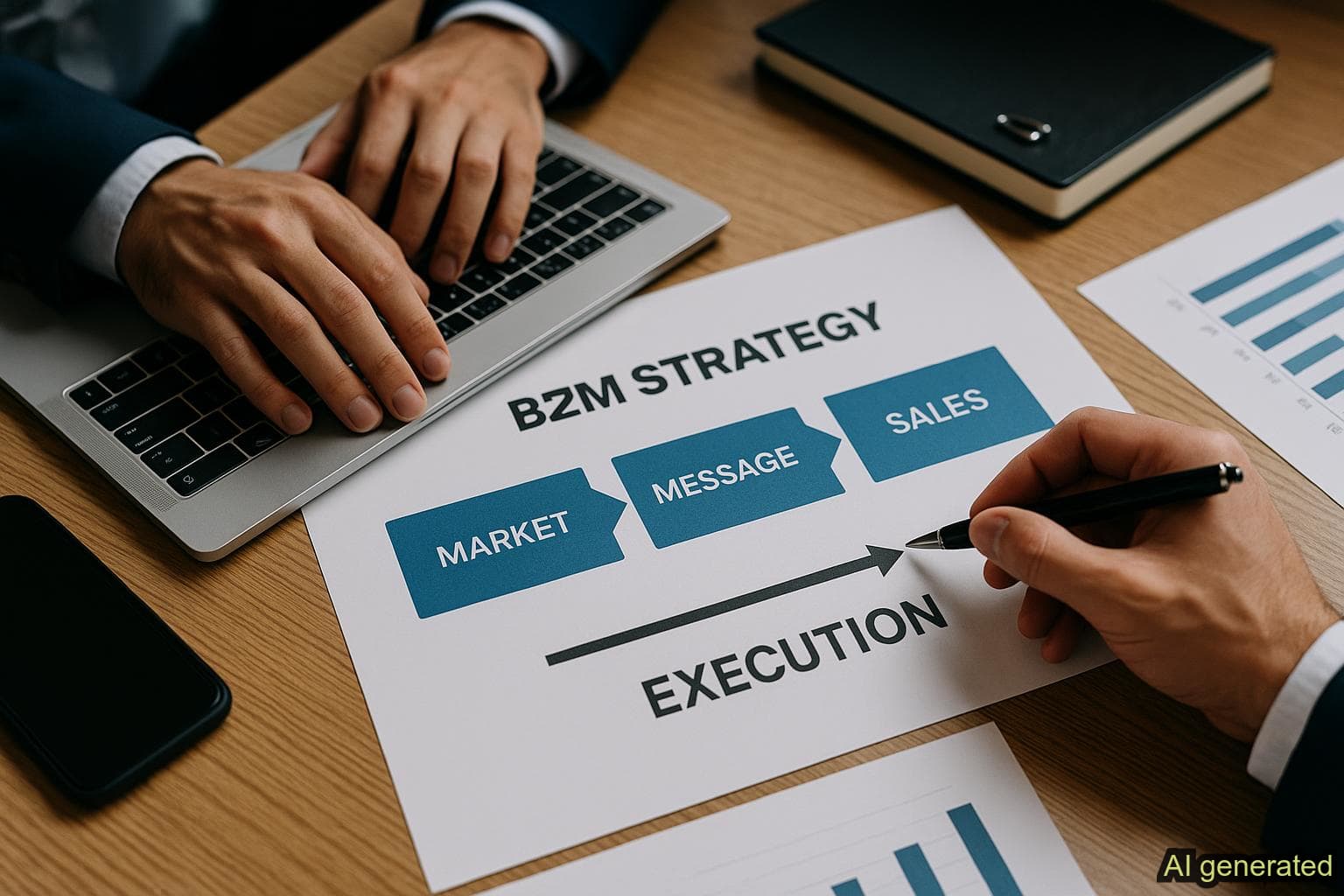
Go-to-market strategy for startups is not a marketing problem. It's an execution problem. Most founders confuse translating collateral and buying contact lists with actual strategy. They send thousands of cold emails and call it a launch plan. What they've built is a path to wasted quarters and eroded trust.
B2B buyers require four to six structured touchpoints before they engage seriously. They evaluate local presence before they evaluate your offer. That's not a cultural preference. It's the operating system they run on. Skip this and even strong products appear amateur. Execute it methodically, and the same product builds credibility in weeks, not years.
This guide walks you through building a repeatable startup GTM framework designed for resource-constrained teams. You'll audit your current outreach, map structured buyer engagement, and track metrics that predict revenue. The founders who build sustainable pipelines aren't the ones with bigger budgets. They're the ones with clearer execution.
Why Most Startup GTM Plans Fail
The Execution vs. Marketing Misconception
Founders mistake activity for strategy. They translate their pitch, buy a contact list, and send 5,000 emails. They label this a go-to-market strategy. What they've actually created is a method to damage credibility at scale.
Real GTM execution operates differently. It's a deliberate sequence of touchpoints timed and ordered to move qualified buyers from awareness through decision. Volume matters only insofar as it reaches the right people. Cadence matters because it builds credibility through repetition.
The outcome gap is measurable. A founder blasting 5,000 unqualified prospects might achieve a 2 percent response rate and close one deal after six months. A founder executing a structured cadence across 100 qualified prospects might achieve a 30 percent response rate and close three to four deals in the same period. Same budget. Different execution. Completely different results.
The Hidden Cost of Skipping Structure
Ad-hoc outreach burns more than capital. It erodes credibility. Buyers remember founders who reach out without local team signals, without demonstrating market-specific knowledge, without a prepared reason to respond. That skepticism compounds. Markets punish shortcuts.
Structured GTM works in the opposite direction. Each planned touchpoint teaches buyers something measurable about your preparation and commitment to their market. After four to six touches in deliberate cadence, perception shifts. You move from stranger to prepared founder.
The Four Core Pillars of Structured GTM
These pillars are not aspirational. They're operational requirements that separate founders who build repeatable pipelines from founders who chase activity.
Pillar 1: Define Your Buyer Profile Ruthlessly
Vague buyer definitions waste touchpoints on people who will never buy. A ruthless ICP specifies four components. First, the exact job title you reach (not 'marketing leader' but 'Director of Demand Generation'). Second, company size range where your solution delivers value. Third, the buying stage when they're actually receptive. Fourth, the three to four pain points you solve better than alternatives.
Specificity concentrates limited outreach. Instead of 'mid-market SaaS companies,' define 'B2B SaaS companies with 150-500 employees planning platform migrations in the next 9-18 months.' This profile reaches people with actual reasons to listen. Your response rates improve. Your sales cycle compresses.
Pillar 2: Map the Touchpoint Cadence
Cadence is both sequence and timing. B2B buyers need four to six structured interactions before engagement. These interactions move through distinct stages: awareness, education, credibility building, decision support. Timing determines success. Seven touches in two weeks burns relationships. Seven touches across four months builds them.
A standard cadence structure follows this pattern. Initial email with relevant insight specific to their role. Follow-up call with targeted discovery. Educational content or case study from similar buyer profile. Webinar or third-party credibility event. Product-specific message tied to their stated priority. Final proposal or commitment stage touch. Channels shift. Sequence remains constant. Consistency outperforms creativity for early-stage teams.
Pillar 3: Build Local Credibility First
Market entry without local credibility signals creates justified skepticism. Buyers ask two questions before they listen. Does this founder have skin in our market? Can they demonstrate market-specific knowledge? You must answer both before you pitch product.
Local credibility doesn't require massive investment. One local hire, a local advisory board member, or a case study from a similar company in your target market sends clear signals of commitment. These signals cost less than quarters spent convincing skeptical buyers to pay attention.
Pillar 4: Lock Down Sales Process Consistency
Small teams benefit from documented process far more than large ones. Consistency means three specific things. First, repeatable qualification criteria your entire team applies to every lead. Second, standardized responses to common objections that reflect your actual value. Third, documented follow-up sequences that don't depend on individual memory.
Without documentation, your co-founder qualifies differently than your first sales hire. Your pipeline becomes chaotic. With documented process, your team moves predictably. Procedures scale when people leave. Heroic effort doesn't.
How to Build Your GTM Playbook Step-by-Step
Step 1: Audit Current Outreach Performance
Before building a new framework, measure current reality. Extract your outreach data from the last 90 days. Calculate three metrics. Response rate: total positive replies divided by total outreach sent. Meeting rate: total meetings booked divided by total responses. Sales cycle length: average days from first touch to closed deal.
This audit reveals exactly where execution breaks. High volume with low response rate signals targeting or messaging problems. Strong response rate with weak meeting-to-close rate signals qualification or sales process problems. Each gap points to a specific, fixable issue. You cannot improve what you do not measure.
| Metric | What It Indicates | How to Calculate |
| Response Rate | Whether your message resonates with target buyer | Positive replies divided by total outreach sent |
| Meeting-to-Close Rate | Whether your sales process qualifies and converts effectively | Closed deals divided by meetings held |
| Sales Cycle Length | How long buyers take to move from awareness to decision | Average days from first touch to closed deal |
| Cadence Adherence | Whether you execute planned touchpoint sequences consistently | Planned touches delivered divided by planned touches scheduled |
Step 2: Design Your Buyer Journey Map
Map the stages your buyer moves through from initial awareness to closed deal. Most B2B buyer journeys contain three to four distinct stages. Awareness: they recognize they have a problem. Consideration: they evaluate possible solutions. Decision: they compare vendors. Post-sale: they implement and measure.
Assign specific touchpoints to each stage with defined objectives. At awareness stage, your goal is education and credibility. Touchpoint might be an educational email with a role-specific insight. At consideration stage, your goal is differentiation. Touchpoint might be a case study showing results for their buyer profile. At decision stage, your goal is confidence and ease. Touchpoint might be implementation timeline or proposal.
Your buyer journey map becomes your operating manual. It's not generic. It's specific to your product, your buyer, and the problems you solve. When your sales team executes this map consistently, pipeline behavior becomes predictable.
Step 3: Set Touchpoint Frequency and Channels
Define your cadence. How many touches? How far apart? Through which channels? A common framework for B2B market entry strategy is six to seven touches distributed across 8-12 weeks. Your actual cadence depends on three variables: your product's sales cycle length, your buyer's buying cycle, and your market's communication expectations.
Channel mix multiplies effectiveness. Email alone feels one-dimensional. Email combined with phone, content, and webinar feels coordinated and intentional. Build a cadence that mixes direct outreach (email, phone), content assets (case studies, webinars), and third-party credibility (referrals, customer testimonials). Variety sustains engagement without overwhelming.
Document this cadence into a repeatable process. Your co-founder, first sales hire, and second sales hire should all execute the same sequence. Documented consistency transforms your pipeline from unpredictable to predictable.
Common GTM Mistakes Startups Make
Mistake 1: Confusing Volume with Validation
A founder sends 5,000 emails and celebrates 100 responses. A 2 percent response rate is not validation. It's confirmation that you reached 5,000 people with no reasons to listen. That's not market feedback. That's a targeting failure.
Contrast this with structured B2B engagement. You send 100 emails to ruthlessly qualified prospects across 12 weeks using a four-touch cadence. You receive 30 responses and secure 8 meetings. Response rate of 30 percent. Meeting rate of 27 percent. Volume is lower. Signal is clearer. You learn what actually resonates because you're reaching people who have genuine reasons to respond.
Mistake 2: Launching Without Local Signals
A founder with a translated pitch and no local team presence reaches out to a prospect in a new market. The prospect perceives an absence of commitment. They think: this founder is testing our market without real investment. They'll disappear if early results disappoint. Skepticism is justified. The founder has communicated disinterest through inaction.
Market entry requires visible commitment. That might be one local hire, a local advisory board participant, or a published case study from a similar company in your target market. This commitment costs less than the quarters wasted convincing skeptics to pay attention. Build credibility before you build pitch.
Measuring GTM Execution (What Actually Matters)
Most startups track vanity metrics. Emails sent. Calls made. Website visitors. These numbers create the illusion of productivity. They don't predict revenue. Track metrics that actually move buyers.
| Core Metric | What It Indicates | Target for Early-Stage Startups |
| Touchpoint-to-Meeting Rate | Efficiency of your qualification and messaging approach | 15-30 percent (one meeting per 3-6 qualified touches) |
| Meeting-to-Opportunity Rate | Effectiveness of your sales discovery and qualifying conversations | 40-60 percent (qualifying meetings that advance to next stage) |
| Cadence Adherence Rate | Consistency of your planned touchpoint execution | 80 percent or higher (80 of 100 planned touches delivered) |
| Sales Cycle Length | Average duration from first buyer interaction to close | 60-90 days (varies by product complexity and buying stage) |
These metrics connect directly to revenue. If touchpoint-to-meeting rate is 5 percent instead of 15 percent, your targeting or messaging requires adjustment. If meeting-to-opportunity rate is 20 percent instead of 50 percent, your sales process is qualifying too loosely or poorly. Each metric points to a specific execution problem. That's actionable insight. Volume metrics generate only noise.
Frequently Asked Questions
How long does it take to see results from a structured GTM approach?
Most teams see measurable pipeline movement within 60-90 days of consistent execution. You need sufficient time for four to six touchpoints to complete and for buying cycles to progress. Patience is part of the system. Abandoning structure to chase quick volume undermines the entire framework.
Can structured GTM work for bootstrapped startups without dedicated sales teams?
Yes. Structure becomes more critical for bootstrapped situations, not less important. With constrained resources, you cannot afford wasted outreach on low-probability targets. Ruthless buyer definition and consistent cadence concentrate effort where it matters. Founders who sell with documented process close faster than teams relying on individual heroics.
What if my product has a short sales cycle? Does the 4-6 touchpoint framework still apply?
Touchpoints compress but don't disappear. A two-week sales cycle might compress four to six touches into 14 days instead of 12 weeks. Sequence and separation still matter. Accelerate the cadence. Do not abandon it. Buyers still need multiple interactions to build confidence.
How should I handle objections that arise during the cadence?
Document objections and responses as part of your playbook. Common objections include: current vendor satisfaction, budget constraints, or need for additional proof. For each objection, develop a response that stays true to your value and keeps the conversation moving. Documented consistency means the same objection receives the same thoughtful response from every team member.
Should I customize messaging for every prospect or maintain standardization?
Standardize the cadence and core message. Customize the opening line and examples. Prospects need to feel recognized, not templated. A prospect at a financial services firm should see a different opening than a prospect at a SaaS company, even when core value remains identical. Achieve personalization at scale by keeping one strong message and creating multiple entry points.
Take Action Now
Founders who treat go-to-market strategy as ad-hoc marketing waste quarters proving credibility to skeptics. Founders who treat GTM as structured execution become credible within weeks. Budget is not the differentiator. Execution discipline is.
Begin today with three immediate actions. First, audit your current outreach using the metrics from Step 1. Second, define your buyer profile with ruthless specificity. Third, map your first buyer journey stage and assign one touchpoint sequence to it.
Download the SalesRealizer GTM Checklist to access buyer profile templates, touchpoint cadence maps, and process documentation frameworks. This toolkit provides the operational structure designed specifically for resource-constrained startups to build sustainable pipelines. Move from strategy reading to execution immediately.