

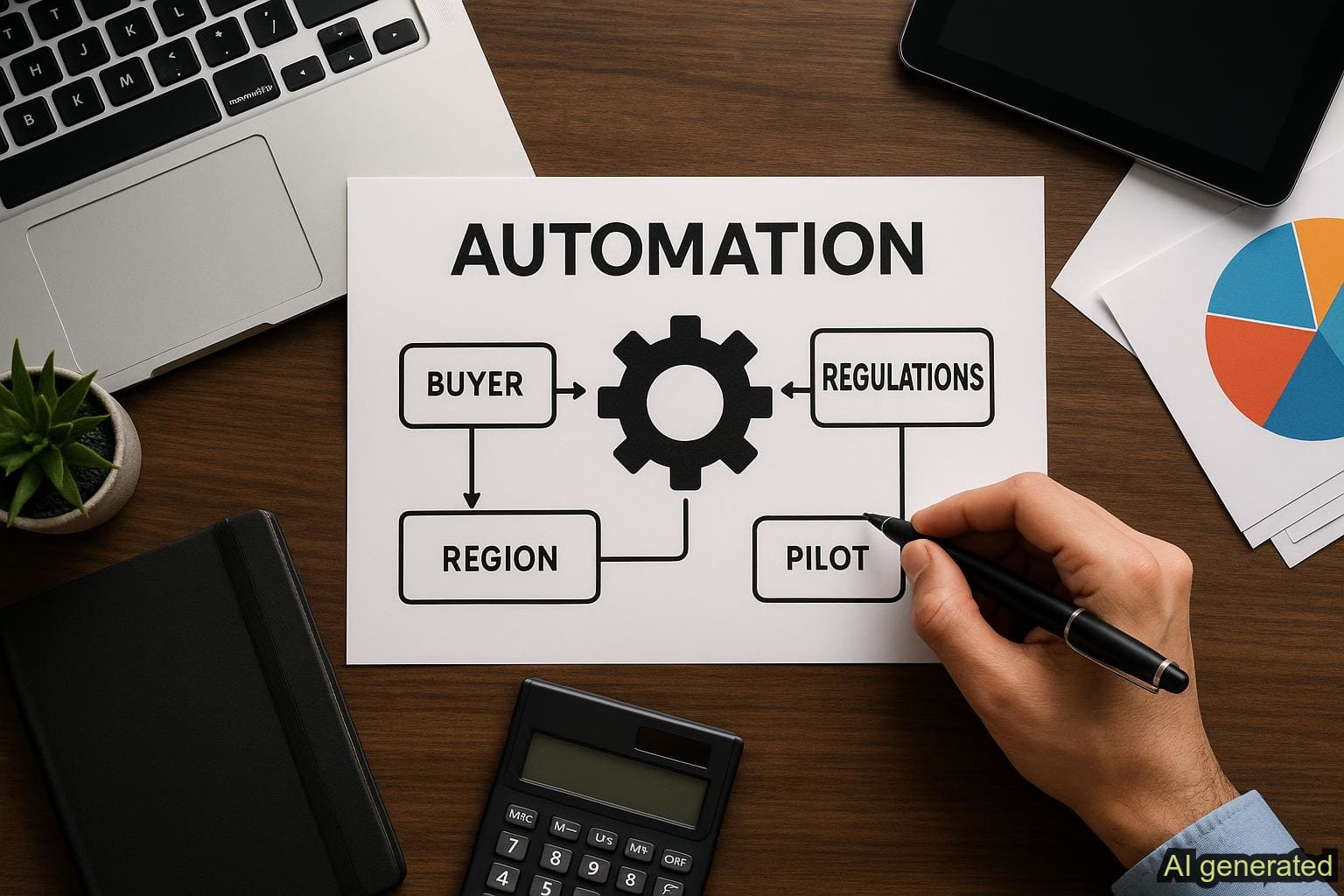
Business Automation Tools: Execution Over Technology
Business automation fails silently. Teams buy the right tool, deploy it wrong, and blame the software. They select solid platforms, roll them out across regions, and watch adoption crater. The problem isn't the business automation tools themselves. It's the execution layer underneath—the market structure, buyer behavior mapping, and regional readiness work that nobody wants to do because it doesn't involve a vendor demo.
Most founders and go-to-market leaders treat business automation tools as a software purchase. They assume selecting features and rolling out workflows solves the problem. That assumption costs them months of wasted deployment time, low team adoption rates, and buyer trust erosion—especially in regulated European markets where automation missteps are permanent. This guide addresses what most automation content skips: the unglamorous structural work required before you deploy a single tool. It's the ICP validation, regional buyer mapping, compliance sequencing, and pilot discipline that separates teams that automate successfully from teams that burn budget and credibility.
Why Tool Selection Alone Fails
The Automation Paradox: Right Tool, Wrong Execution
A mid-market SaaS company selects a sales automation platform with strong lead routing and cadence capabilities. The platform is legitimate. The feature set matches their stated needs. They roll it out to their sales team across three countries. Within six weeks, adoption stalls. Half the team reverts to manual workflows. The other half uses the tool inconsistently. The promised efficiency gains never materialize.
The tool wasn't the problem. The company never validated ICP alignment across regions, never mapped how buyers in each market actually engage, never piloted in one region to test workflows before scaling. They assumed a US-based sales cadence would work in Germany. It didn't. German B2B buyers expect 4–6 touchpoints spaced over weeks; the automation was set to 2–3 rapid iterations. It looked like spam to the buyer. The team, seeing low response rates, stopped trusting the tool. This scenario repeats constantly because business automation tools are treated as technology decisions, not execution disciplines. The right tool deployed without market structure alignment guarantees low adoption and minimal ROI.
The Real Bottleneck Isn't Features—It's Alignment
Sales automation workflows and other business automation tools only function when they align with three things: actual buyer behavior in your target market, regional compliance and regulatory requirements, and your team's operational readiness. Misalignment on any of these three kills adoption faster than a bad product ever could. A marketing automation platform with strong nurture workflows is useless if your nurture sequences don't reflect how your ICP in Germany actually consumes content. A sales automation workflow tool with sophisticated lead routing fails if you haven't validated that your ICP definition holds across regions. An operations automation system designed for US data compliance creates legal friction in GDPR-regulated markets if you haven't baked consent management into the workflows from day one.
Feature richness masks execution weakness. Comprehensive business automation tools make it easy to deploy something fast. But fast deployment without market readiness burns credibility. The alignment work—buyer mapping, compliance audits, pilot validation—is what separates successful automation adoption from failed rollouts.
Three Core Automation Functions Every B2B Operation Needs
Sales Automation: Lead Routing and Touchpoint Sequencing
Sales automation workflows handle three core tasks: assigning leads to the right seller based on territory, skill, or capacity; orchestrating touchpoint sequences including email, call, and follow-up timing; and tracking engagement to trigger next-step actions. In theory, this frees sales teams from manual data entry and repetitive follow-up work. In practice, it only works if the sequencing matches regional buyer behavior. A US-based sales cycle often assumes rapid iteration: first touch, quick follow-up, escalation within days. German B2B buyers operate differently. They expect structured communication spaced over weeks. They check for local presence and credibility signals before they engage seriously. A sales automation workflow built on US assumptions—short sequences, high frequency, aggressive escalation—signals desperation to German buyers. It damages trust instead of building it.
Business automation tools only deliver ROI when workflows are built around how your specific market actually buys. This requires regional buyer research before tool deployment, not template-based cadences after selection.
Marketing Automation: Nurture Workflows and Buyer Signal Mapping
Marketing automation captures intent signals and moves prospects through nurture workflows based on engagement and behavior. It maps content consumption, tracks email opens and clicks, and triggers follow-up sequences when a buyer shows buying signals. The efficiency gains are real—teams can nurture hundreds of prospects without manual intervention. But nurture workflows must reflect how your target market actually engages. European buyers, especially in regulated industries, engage differently than US buyers. They consume longer-form technical content before they'll take a call. They expect multilingual options. They distrust generic templates and rapid follow-up sequences. Marketing automation workflows that assume US buying behavior—short content, fast escalation to sales—fail in Europe because they miss trust-building touchpoints that buyers actually value.
Effective marketing automation adoption requires buyer signal research and content localization before workflows are deployed. Generic, template-based nurture sequences underperform because they ignore regional buying patterns and trust-building requirements.
Operations Automation: Data Hygiene and Compliance Handoff
Operational automation for B2B handles backend work: validating data quality in your CRM, flagging duplicates and invalid records, automating compliance reporting, and ensuring information flows correctly between systems. This layer prevents data decay and keeps your sales and marketing teams working with accurate, up-to-date information. Regulatory requirements reshape operations automation significantly. GDPR compliance in Europe requires consent tracking, data residency validation, and automated deletion workflows. US-based automation workflows don't account for these requirements. Deploying operations automation without embedding regional compliance requirements creates legal friction and forces manual workarounds. It becomes a liability instead of an efficiency gain.
Business automation tools and operational automation must be designed around regional compliance rules from the start. Retrofitting compliance into existing workflows is expensive and error-prone.
The Implementation Sequence That Reduces Adoption Failure
Step 1: Audit Your Current Manual Bottlenecks (Not Your Tool Gaps)
Start by identifying where your teams are manually repeating work and losing time or accuracy. Don't start by shopping for business automation tools. Start by identifying pain. Ask your sales team: Where do you spend time on data entry instead of selling? Ask operations: Which processes are error-prone because they're manual? Ask marketing: What nurture tasks are repetitive but low-value? Map three things for each bottleneck: the repetitive task, the time cost per week, and the error rate. This audit reveals which automation initiative will deliver the highest ROI and which teams have the most to gain from automation implementation.
This bottleneck-first approach ensures that your business automation tools investment targets real problems, not perceived tool needs. It also builds internal buy-in because teams see that automation is solving their actual friction, not imposing a platform they didn't ask for.
Step 2: Map Buyer Behavior to Your Target Market (Not Your Assumptions)
Before designing business automation tools workflows, you must understand how your ICP actually buys in your target region. This requires research, not assumptions. Document: How many touchpoints does your buyer expect before taking a meeting? What channels do they trust (email, LinkedIn, phone)? What messaging triggers skepticism or immediate dismissal? How long is the typical sales cycle from first touch to close? US B2B buyers typically respond to 2–3 touchpoints, email and LinkedIn outreach, direct value propositions, and 3–4 month sales cycles. German B2B buyers expect 4–6 touchpoints spaced over weeks, structured email and phone communication, skepticism of exaggerated claims, and 6–9 month cycles with emphasis on local presence and regulatory compliance.
Once you map actual buyer behavior, business automation tools workflows are designed to match it. Generic templates become irrelevant because you're building workflows specific to how your market actually engages. This is the difference between automation strategy that works and automation that gets ignored.
Step 3: Pilot in One Region Before Scaling
Deploy your business automation tools workflows to one region first. Run the pilot for 4–8 weeks with 1–2 sales or marketing teams. Measure adoption rates, response rates, and adoption friction. Collect feedback on which workflows feel natural and which create pushback. Identify compliance gaps or messaging misalignments before they spread across your entire operation. A pilot reveals execution gaps that research alone cannot. Teams spot bottlenecks in workflow logic. Buyers provide feedback on cadence and messaging. You discover whether your assumptions about regional buyer behavior actually hold under real deployment conditions. Without a pilot, you're scaling assumptions, not validated workflows.
Most rollout failures stem from skipping this step. Teams assume research validates business automation tools workflows and scale globally without testing. A 4–8 week pilot that catches one major misalignment saves months of low-adoption friction and rebuilding. It's the cheapest insurance against expensive mistakes.
Step 4: Lock in Local Compliance and Messaging Before Deploying Globally
Before scaling business automation tools across regions, embed compliance and messaging standards into your workflows. GDPR consent rules, data residency requirements, and regional messaging guidelines must be hardcoded into automation logic, not applied as manual overrides later. For Germany and DACH regions, this means automating consent verification before sending outreach emails, ensuring data stays on EU servers if required, and validating that messaging reflects local regulatory expectations. For India, it might mean different consent requirements and regional data residency rules. Compliance isn't one-size-fits-all. But locking in regional compliance during automation design prevents costly retrofits and legal friction downstream.
Global scaling without compliance locking creates compliance debt. Teams cut corners during implementation. Manual workarounds emerge. Regulatory risk accumulates quietly. The discipline of embedding compliance into business automation tools at design time eliminates this debt.
Market-Specific Automation Execution: Why Generic Workflows Fail
Why German Buyers Reject Generic Business Automation Tools Workflows
German B2B buyers operate under different trust rules than US buyers. They expect a company to demonstrate local presence and structural credibility before engaging in a sales conversation. Generic, rapid-fire automation sequences signal that a vendor doesn't understand the market. It looks like a contact-list operation, not a serious market player. A sales automation workflow designed for the US market—three touchpoints over two weeks, aggressive value propositions, quick escalation to a phone call—fails in Germany because it violates buyer expectations about how established vendors behave. German buyers interpret rapid escalation as desperation. They expect structured communication spaced over weeks. They want to see that you've invested in understanding the market, not that you've purchased a contact list and activated a template.
Automation strategy in regulated, trust-heavy markets must be designed around buyer expectations about credibility and pacing. One global template for all regions guarantees that your business automation tools workflows look wrong in most of them.
How Regulatory Nuance Changes Automation Sequencing
GDPR, consent management, and data residency rules don't just create compliance checkboxes. They reshape when and how you can automate outreach, nurture, and follow-up. A buyer in Germany must opt in before receiving marketing emails—not opt out after receiving them. This changes the automation sequencing entirely. If you start automating nurture workflows before you have explicit consent from a German buyer, you create legal friction immediately. If you automate lead scoring before you've validated data residency rules, you risk storing personal data outside the EU, which violates GDPR. These aren't edge cases. They're the baseline rules for market-specific automation requirements.
Regulatory compliance forces a different automation sequence: validate consent first, then trigger nurture. Check data residency before pushing records between systems. Automate deletion workflows when a buyer unsubscribes, not as a manual task. Compliance isn't a layer you add on top of business automation tools. It's the structure that determines how automation works.
Touchpoint Density and Local Trust Requirements
Different markets require different business automation tools frequencies. US B2B cycles often assume high touchpoint density: multiple emails, LinkedIn messages, and quick phone calls within a short window. German B2B cycles require lower frequency and longer spacing to avoid damaging trust. Research shows that German B2B buyers need 4–6 touchpoints before they'll seriously consider a meeting. But these touchpoints are spaced over weeks, not days. A sales automation workflow that delivers four touches in a week looks aggressive and damages credibility. The same four touches spaced over six weeks build trust incrementally and align with buyer expectations.
Touchpoint density is a market-specific decision. Generic automation templates that work for US buyers at high frequency will fail in Europe at the same frequency. Regional automation strategy requires different cadences baked into the workflows themselves.
Avoiding the Shortcuts That Burn Credibility
Three Common Mistakes That Guarantee Low Adoption
Most automation failures follow the same pattern. Teams make one of three mistakes, each of which burns credibility and guarantees low adoption of business automation tools.
- Tool-first thinking: Buying business automation tools before mapping bottlenecks, validating ICP, or researching regional buyer behavior. The tool then sits misaligned with actual business needs. Teams see it as an imposed solution, not a problem-solver. Adoption stalls.
- Ignoring regional friction: Assuming one automation workflow works across the US, DACH, and Asia. It doesn't. US buyer expectations, German regulatory requirements, and Indian market structures are different. One global template fails in most regions. Low adoption and buyer trust erosion follow.
- Rushed rollouts: Skipping pilots, ignoring compliance requirements, and launching globally without validation. Execution gaps emerge in production. Compliance issues surface only after deployment. Teams lose confidence in business automation tools and revert to manual workflows.
| Approach | Tool Selection | Market Readiness | Pilot Phase | Results |
| Automation-First (Common Failure Pattern) | Buy first, validate later | Skipped or minimal | Deploy to all regions immediately | Low adoption, buyer distrust, compliance gaps, high spend, minimal ROI |
| Execution-First (Recommended) | Select based on mapped needs | ICP validation, regional buyer research, compliance audit | 4–8 week single-region validation | High adoption, regional alignment, compliance built-in, measurable ROI, scalable confidence |
Your Market-Entry Automation Checklist
Pre-Deployment Validation Steps
Before deploying any business automation tools, validate these fundamentals:
- ICP and regional buyer mapping complete: Document how your target buyer actually engages in each target region. Research buyer expectations around touchpoint frequency, channel preferences, and trust-building signals.
- Local compliance audit finished: Map GDPR, consent rules, data residency requirements, and any industry-specific regulations for each region. Identify where automation workflows must adapt to compliance requirements.
- Pilot plan defined: Identify one region, 1–2 teams, 4–8 week timeline, and clear success metrics (adoption rate, response rate, feedback quality).
- Messaging and content localized: Ensure that email templates, call scripts, and nurture sequences reflect regional language, tone, and regulatory expectations. Generic, translated content fails.
- Team readiness assessed: Do your teams understand the automation workflow? Are they prepared to use it? Will they resist because it feels imposed rather than problem-focused?
This checklist is minimum viable validation for automation adoption strategy. Skipping any of these steps increases adoption failure and regulatory risk. Following all of them dramatically improves the probability that business automation tools deliver real ROI.
Conclusion: Structure Before Tools
Automation is an execution discipline, not a software purchase. Most teams buy the tool and hope adoption follows. Winning teams validate market structure first, then deploy the tool. They audit bottlenecks before selecting business automation tools. They research regional buyer behavior before designing workflows. They pilot in one region before scaling globally. They embed compliance into automation design, not retrofit it afterward. Skipping this work—ICP validation, regional buyer mapping, compliance sequencing, pilot discipline—guarantees low adoption and wasted spend. Most teams buy the tool and hope. Winning teams structure the market first, then deploy the tool.
Automating your market entry requires more than business automation tools. It requires market structure.
SalesRealizer runs your full market entry into Germany, DACH, Europe & India—ICP research, outbound, AI agents, and sales automation, all done for you. Built by Europeans who know the market.
Frequently Asked Questions
How long does a typical business automation tools pilot take?
A pilot typically runs 4–8 weeks with one region and 1–2 teams. This timeframe is long enough to test workflows under real conditions and collect meaningful feedback, but short enough to course-correct quickly if issues emerge. Shorter pilots don't generate enough data. Longer pilots delay broader rollout.
Can I use the same automation workflows across all my target markets?
No. Buyer behavior, regulatory requirements, and trust-building expectations differ significantly across regions. A workflow that works for US buyers at high touchpoint frequency will fail in Germany at the same frequency. Template-based business automation tools assume one global buyer, which doesn't exist. Regional variations must be embedded into workflows.
What if I don't have time for a full bottleneck audit before selecting business automation tools?
You don't have time not to. A rushed tool selection without understanding your actual bottlenecks guarantees misalignment. Tools selected without mapping real problems sit unused. The audit takes time but saves far more time by ensuring your business automation tools investment targets genuine friction points.
How do I handle compliance when automating across multiple regions?
Audit compliance requirements for each region first, then embed those requirements into business automation tools workflows before deployment. Don't plan to handle compliance manually after automation launches. Compliance must be hardcoded into workflows themselves—consent verification, data residency checks, deletion workflows, and regional messaging requirements must all be part of the initial automation design.
What metrics should I track during a pilot phase?
Track team adoption rate (percentage of team using the tool consistently), workflow completion rate (percentage of automated sequences that complete as designed), buyer response rate (email opens, clicks, meeting acceptance), and qualitative feedback (team feedback on friction points and messaging resonance). These metrics reveal whether workflows are functioning as intended and whether regional assumptions hold under real conditions.
Is it worth investing in business automation tools if my team is small?
Yes, if you're experiencing repeated manual bottlenecks. Small teams especially benefit from automation because each person does multiple roles. But apply the same discipline: audit bottlenecks first, validate buyer behavior second, pilot before scaling. Don't automate for automation's sake. Automate to eliminate specific friction that's costing you time and accuracy.